
Shifting from Mindless Contact to Meaningful Impact: What Jesus Teaches Us About Purposeful Encounters
Updated: Oct 12

Every day we cross paths with dozens of people. At work, at the grocery store, in passing. Most of those interactions stay surface level. But what if those moments were actually divine appointments? The story of Jesus and the Samaritan woman in John 4 shows us exactly what it looks like to move from mindless contact to meaningful, life-changing impact.
Why Did Jesus Have to Go Through Samaria?
In John 4:1-4, we read that Jesus left Judea and headed to Galilee. The text notes something easy to overlook: "He had to go through Samaria."
This was not the typical route. In fact, most Jewish travelers went out of their way to avoid Samaria entirely. There were two well-known alternate paths, one through the Jordan River Valley to the east, and one along the Mediterranean coast to the west. Both were longer, but they allowed travelers to sidestep the deep social and religious tension that existed between Jews and Samaritans.
Jesus chose neither of those routes. He went straight through Samaria. Not because it was geographically convenient, but because it was missionally necessary. There was a divine appointment waiting for Him there.
What Does It Mean to Live "On Mission"?
Think of two ships on the same ocean. One has no sail and no navigation. It drifts wherever the current takes it. The other has a sail and modern navigation equipment. It goes exactly where the sailor intends.
Many of us drift through our daily relationships like the first ship. We have conversations that go nowhere. We follow social norms that keep us from truly connecting with people. We take the "safe" routes that everyone else takes.
Jesus modeled something different. He was always on mission. Every encounter, every conversation, every detour had purpose behind it. His example challenges us to ask: are we drifting through our relationships, or are we navigating them with intention?
How Mission Overcomes Social Barriers
When Jesus arrived at Jacob's well and saw the Samaritan woman, He did something that broke every social rule of His day. He spoke to her. He asked her for a drink.
She immediately pointed out the problem:
"You are a Jew and I am a Samaritan woman. How can you ask me for a drink? For Jews do not associate with Samaritans." (John 4:9)
She was ready to enforce the status quo. But Jesus was not moved by it. He knew He was on a divine assignment, and that assignment was bigger than cultural tradition.
This is what happens when we are truly on mission. We stop seeing people as interruptions or inconveniences. We stop letting ethnicity, social standing, or religious background determine who is worth our time. We start seeing people as divine assignments.
The church has not always gotten this right. History shows that social and cultural norms have sometimes shaped the church's behavior more than the example of Jesus has. But Jesus never allowed social barriers to get in the way of His spiritual mission. That is the standard we are called to follow.
People Need to Feel Seen, Valued, and Acknowledged
When we walk past someone in need, when we ignore the poor, when we avoid people who are different from us, we are taking the alternate route. Jesus went through Samaria because the people there mattered. They were worth the detour. They were worth the conversation.
A clear sense of mission turns what looked like a closed door into a wide open opportunity for ministry.
How Mission Addresses the Deepest Needs
After the Samaritan woman pushed back, Jesus did not get offended and walk away. He pivoted the conversation from physical water to something far greater.
"If you knew the gift of God and who it is that asks you for a drink, you would have asked Him and He would have given you living water." (John 4:10)
She did not fully understand yet. She asked practical questions about where He would get this water and whether He was greater than Jacob. But her curiosity was growing. Underneath her defensiveness was a real spiritual thirst.
This is what a mission-driven mindset allows us to see. Not just the surface-level response someone gives us, but the deeper need underneath it. Some people respond with aggression or dismissiveness not because they want us to leave, but because they are hurting and do not know how to open up.
Do Not Be Fooled by the Initial Response
Jesus was not deterred by her initial resentment. A few moments later, this same woman who told Him He should not even be speaking to her was running back to her community to tell everyone about Him.
We need discernment to recognize when someone's sharp response is actually a reflex, not a rejection. When we stay on mission and keep the conversation going with grace, we create space for people to move from defensiveness to openness.
Jesus Revealed Her Past Without Shaming Her
When Jesus told her to go call her husband, He was not trying to embarrass her. He was moving her toward a deeper spiritual awakening. She had been married five times and was living with a man who was not her husband. Jesus knew all of it, and He still engaged her with dignity.
God is not concerned with our past. He is concerned with our future. He does not disqualify people because of where they have been. He meets them where they are and points them toward something better.
True Worship Is Not About Location
The woman brought up the old debate about where to worship, whether on the mountain her ancestors used or in Jerusalem. Jesus redirected her entirely.
"Yet a time is coming and has now come when the true worshipers will worship the Father in the Spirit and in truth, for they are the kind of worshipers the Father seeks. God is Spirit, and His worshipers must worship in Spirit and in truth." (John 4:23-24)
Worship is not confined by geography. It is not inherited from ancestors. It is personal, it is spiritual, and it is available to everyone, regardless of background or past.
How Mission Mobilizes an Entire Community
The woman left her water jar at the well and ran back to town. She told everyone:
"Come, see a man who told me everything I ever did. Could this be the Messiah?"
Because of her testimony, an entire community of Samaritans came to Jesus. They urged Him to stay, and He remained two days. Many more believed because of His words.
This is the ripple effect of a life driven by mission. One transformed person becomes a catalyst for change in their entire community. Jesus only needed to go through Samaria once. He only needed one conversation. And from that single encounter, a whole community experienced grace.
He could have taken either of the alternate routes. He chose Samaria. That choice changed everything.
A Transformed Life Naturally Becomes a Testimony
The woman who came to the well alone, possibly to avoid others, left as an evangelist. Her identity was rewritten. What she had experienced was too significant to keep to herself.
When we allow God to use our encounters purposefully, the people we reach do not just receive something for themselves. They carry it back to their circles. Our clarity of purpose can unlock their purpose.
Three Truths to Carry With You
Mission overcomes social barriers. When we know our assignment, we stop letting ethnicity, religion, or social standing determine who we reach out to.
Mission addresses the deepest needs. A clear sense of purpose moves us past small talk and into conversations that actually matter.
Mission mobilizes community. One purposeful encounter can set off a chain reaction of faith and healing that reaches far beyond the original conversation.
Life Application
This week, choose to go through your "Samaria." Identify one person you have been avoiding or overlooking, whether because of social awkwardness, cultural difference, or simply habit. Make a deliberate effort to initiate a real conversation with them. Ask God beforehand to give you discernment, compassion, and the right words. Do not settle for small talk if the door opens for something deeper.
Ask yourself these questions as you prepare:
Are there people in my daily life I have been treating as interruptions rather than divine appointments?
What social or cultural "alternate routes" have I been taking to avoid certain people or conversations?
Am I willing to let God use an ordinary moment this week for extraordinary impact?
Do I see people the way the world labels them, or the way God sees them?
Jesus was tired when He sat down at that well. He had every reason to rest and move on. But He stayed on mission. The result was a woman transformed, a community awakened, and a story still being told thousands of years later. That same mission belongs to us today.

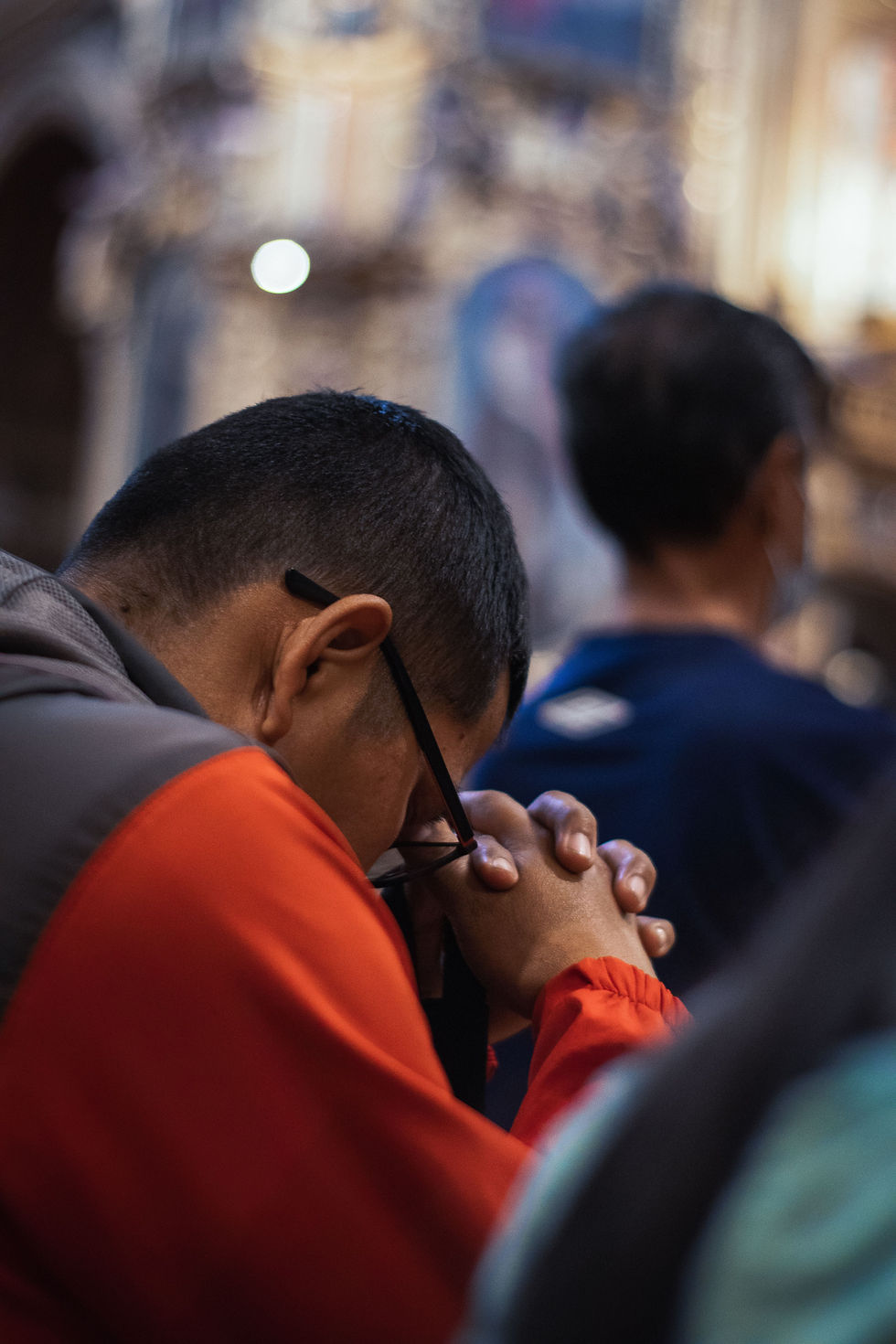

Have you thought about going through your "Samaria"? What emotions did the thought arouse?