
Seeing the Unseen: What True Compassion Really Looks Like
It is easy to walk past someone in need and look the other way. Most of us have done it. But what happens when we stop, make eye contact, and truly see the person in front of us? The story of a lame man at the temple gate in Acts 3 shows us that compassion is not just about what we give. It is about what we are willing to see, and what we are willing to offer.
Why Do We Look Away From People in Need?
There is a reason we avoid eye contact with the person sitting at the corner of a busy intersection. Making eye contact creates a sense of responsibility. When we look away, we feel free from the guilt of not helping. It is a quiet, almost unconscious choice that many of us make regularly.
Jesus addressed this directly in the parable of the Good Samaritan. A priest and a Levite, both religious men, saw a wounded man on the side of the road. Rather than stopping, they crossed to the other side of the street. They saw him, but they chose not to truly see him. It was the Samaritan, the social outcast, who stopped, made eye contact, and helped.
True compassion begins the moment we stop looking away and start truly seeing the people around us, their hunger, their loneliness, and their pain.
The Man at the Beautiful Gate: Understanding Acts 3
In Acts 3:1-9, Peter and John were on their way to the temple for prayer when they encountered a man who had been lame from birth. He was placed at the temple gate called Beautiful every single day to beg from those entering the courts.
Three things stand out about this man's situation:
He had been lame from birth. This was all he had ever known. His condition felt permanent, both to him and to those around him.
He could not get there on his own. He was carried and placed there daily, completely dependent on others just to survive.
He begged for money. This was his routine, and he had accepted it as his life.
What is striking is the name of the gate where he sat. It was called Beautiful. Every day, religious people walked past this broken man on their way into a beautiful place of worship. The routine had made them blind to him.
What Did Peter and John Do Differently?
When Peter and John approached, the lame man asked them for money, just as he had asked everyone else. But something different happened.
"Peter looked straight at him, as did John. Then Peter said, 'Look at us!'" — Acts 3:4
They made eye contact. They stopped. They treated him as a person worthy of full attention and genuine respect. In doing so, they restored his dignity before a single miracle took place.
They also refused to accept his situation as permanent. Everyone else had walked past him and accepted that this was simply his life. Peter and John saw something different. They saw someone whose circumstances could be changed.
Apparent Need vs. Actual Need: What People Really Need From Us
The lame man was expecting money. That was his apparent need, the thing he asked for, the thing he had always received. But Peter and John recognized a deeper, actual need.
"Silver or gold I do not have, but what I do have I give you. In the name of Jesus Christ of Nazareth, walk." — Acts 3:6
Money would have bought him lunch. It would have sustained him at that gate for another day. But it would have left him exactly where he was. Someone once described this kind of giving as a band-aid for a lifelong wound. It manages brokenness without ever addressing it.
This is what can be called the handout trap. It is not wrong to meet physical needs. Feeding the hungry and clothing the poor are important and biblical acts of compassion. But if that is all we offer, we are only helping people manage their brokenness, not escape it.
God offers something more: total transformation.
What Do We Actually Have to Give?
Peter was honest about his limitations. He did not have silver or gold. He could not fix every material problem. But he did not let that stop him. He offered what he had, and what he had was access to the power of Jesus Christ.
This is an important distinction. The healing did not come from Peter's strength or cleverness. It came from the name and authority of Jesus. Peter simply pointed to the source.
The same is true for us. We may not be able to solve every problem around us. A small church with limited resources cannot fix the world's material needs. But we can offer what we have. And what we have, when rooted in Christ, carries the power to transform lives.
What Happens When True Compassion Is Offered
Peter did not pray from a distance. He reached out, took the man by the right hand, and helped him up. It was personal. It was physical. It was the kind of compassion that gets involved.
"Taking him by the right hand, he helped him up, and instantly the man's feet and ankles became strong." — Acts 3:7
The Greek word used here, egeiro, means to awaken, to rouse, or to raise up. It is the same word used in the New Testament to describe resurrection, including the resurrection of Jesus. This is the kind of compassion we are called to offer: one that raises dead things back to life.
The result was unmistakable.
"He jumped to his feet and began to walk. Then he went with them into the temple courts, walking and jumping and praising God." — Acts 3:8
A man who had never walked in his entire life was now leaping and praising God in the temple. The people who saw him were filled with wonder and amazement. This is what happens when we stop offering routine sympathy and start offering resurrection-level compassion.
Who Is Sitting at Your Gate?
It is worth asking: who in your life have you been passing by? A neighbor, a coworker, a family member, a friend? Someone to whom you have been offering quick fixes, pleasantries, or distant sympathy, when what they actually need is for someone to look them in the eye and introduce them to the power of God?
We do not always see in others what God sees in them. Peter and John looked at a lame beggar and saw someone awaiting a blessing. They saw someone whose situation was not permanent. They saw someone God wanted to transform.
God sees the same in the people around you.
Life Application
This week, identify one person in your life who you have been passing by, someone you have offered routine sympathy or surface-level help without truly stopping to see their deeper need. Make a deliberate choice to stop, make eye contact, and engage them with genuine attention. Pray and ask God what He wants you to offer them beyond the apparent need. It may be a conversation, a word of encouragement, an invitation, or simply your presence. Offer what you have, and trust God to work through it.
Ask yourself these questions as you reflect:
Who in my life am I deliberately avoiding eye contact with, and why?
Am I offering the people around me only what sustains them, or am I pointing them toward what can truly transform them?
What do I actually have to give, beyond material things, and am I willing to offer it?
Do I see the people around me the way God sees them, as people awaiting a blessing rather than people stuck in permanent circumstances?
Compassion that looks away is not really compassion at all. But compassion that stops, sees, and offers the power of Christ can raise someone from where they are to where God intends them to be.

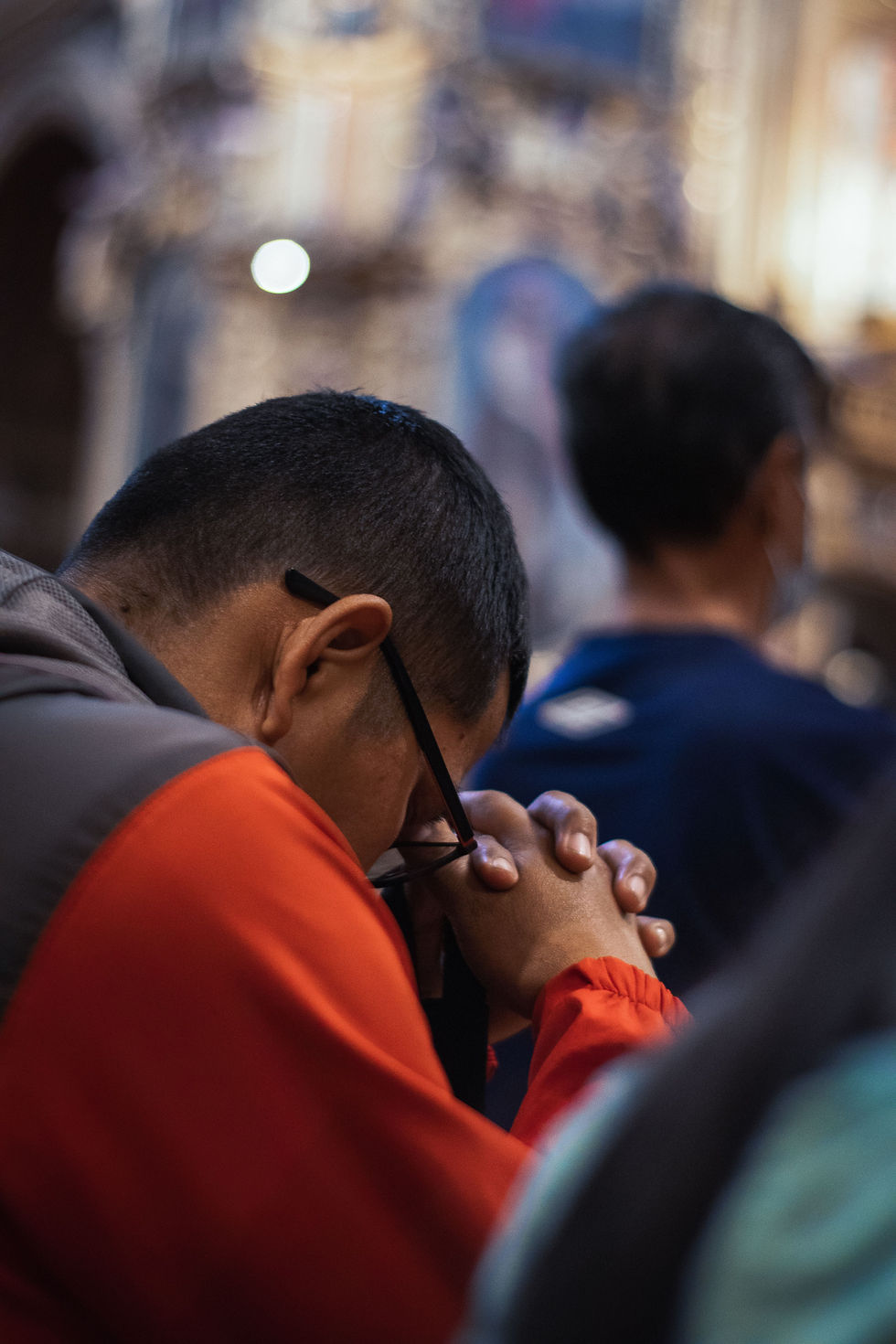

Who Is Sitting at Your Gate? This indeed is a question we should prayerfully ask ourselves.